Published on: 30 October 2026
Bank Auction Property in Jaipur: How to Find and Buy Auction Properties
Quick answer
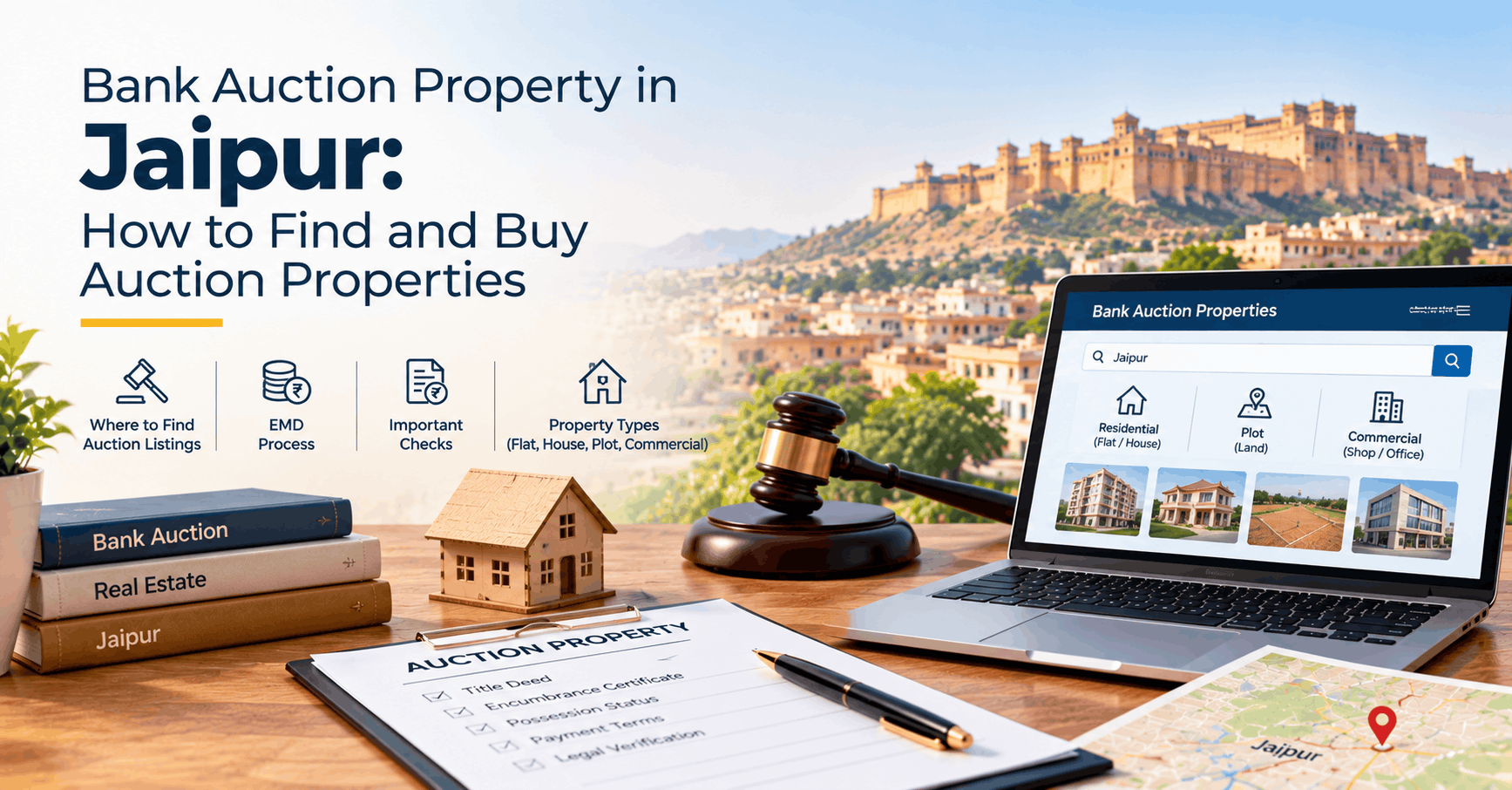
A bank auction property in Jaipur is a property offered for sale by a bank to recover unpaid loan dues. Buyers can find listings on official bank websites and auction platforms such as BAANKNET. Before bidding, check the reserve price, Earnest Money Deposit (EMD), auction terms, property documents, outstanding dues, and possession status. Submit the required documents and funds within the specified deadlines, and bid only after completing due diligence.
Buying property in Jaipur does not always mean choosing a home from the regular real estate market. Bank auctions offer another route for buyers interested in residential flats, houses, plots and commercial properties. Some auction properties may have attractive reserve prices, but a lower starting price does not automatically make a property a good investment.
If you are searching for a bank auction property in Jaipur, you need to understand where genuine auction listings are published, how the Earnest Money Deposit (EMD) works, and what to verify before bidding. You can also compare available properties for sale in Jaipur to evaluate auction opportunities against regular-market options. Checking legal documents, possession status, payment deadlines and additional expenses can help you avoid costly mistakes and decide whether an auction property suits your budget.
What Is a Bank Auction Property?
A bank auction property is an asset offered for sale by a lender to recover unpaid loan dues. When a borrower defaults on a secured loan, the lender may initiate legal proceedings to enforce its security and sell the property, subject to the applicable law and procedure.
Depending on the auction, buyers may find:
- Residential flats and independent houses
- Residential plots and land
- Shops and commercial properties
- Offices, industrial units and other secured assets
Many secured-property auctions follow procedures under the SARFAESI Act, 2002, but not every auction follows the same legal route. The applicable rules depend on the type of asset, the authority conducting the auction and the sale conditions.
Why Do Buyers Consider Bank Auctions?
Buyers often explore bank auctions because the reserve price may be attractive compared with prices for similar properties in the open market. Auctions can also provide access to assets that are not being marketed through conventional property listings.
However, the reserve price is only the starting point for bidding. Competition may increase the final price, while repairs, unpaid dues, legal issues or possession-related expenses may affect the total investment.
The objective should not be to find the cheapest advertised property. It should be to identify a legally and financially suitable property at a reasonable total cost.
How to Find Bank Auction Property in Jaipur
Finding a suitable auction starts with checking reliable sources. Use the following methods to identify listings and verify their authenticity.
1. Check Official Bank Auction Notices
Start with the websites of banks and financial institutions. Look for sections such as Auction Notices, Property Auctions, SARFAESI Notices or Sale Notices.
For public-sector bank auctions, you can also explore BAANKNET, the bank e-auction platform introduced to streamline listings and auctions of bank assets. The bank's official notice should remain your primary reference for the specific property.
Review the following details in every notice:
- Property address and description
- Reserve price and EMD amount
- Auction date, time and bidding platform
- Property inspection arrangements
- Payment deadlines and sale conditions
- Contact details of the authorised officer
Never rely solely on a social media post, forwarded message or third-party advertisement. Confirm the listing through the bank or authorised auction service provider before transferring any money.
2. Search for Auction Properties in Jaipur
Use Jaipur as your location filter when searching for bank auction flats Jaipur or other auction property for sale Jaipur. Compare listings by locality, property type, area, reserve price and auction date.
Check whether the property is located in an area that suits your requirements, such as Jagatpura, Mansarovar, Vaishali Nagar or another Jaipur locality. Do not assume that every listing described as being in Jaipur is within the municipal limits or has the same planning and land-use status.
Read the complete sale notice to confirm the exact address and property details. If any information is missing or inconsistent, seek written clarification before proceeding.
3. Compare the Reserve Price With Market Prices
The reserve price is the minimum price specified for the auction under its applicable terms. It is not necessarily the final price at which the property will be sold.
Compare the property with similar assets in the same locality. Consider the size, building condition, access, nearby facilities and likely resale demand.
You can also compare properties for sale in Jaipur to understand regular-market alternatives. This helps you assess whether an auction offers a genuine financial advantage rather than an apparently low price that comes with additional risks.
Bank Auction Property Buying Process: Step by Step
Once you find a promising listing, follow a structured process before committing money.
Step 1: Read the Complete Auction Notice
The auction notice explains the reserve price, EMD, bidding increments, payment schedule, inspection arrangements and conditions of sale.
Look for terms describing the property as being sold on an “as is where is”, “as is what is” or similar basis. Such wording may place significant responsibility on the buyer to investigate the property's condition, title and possession before bidding.
Also check whether the notice mentions pending litigation, existing occupants, encumbrances or other relevant limitations. If the documents are unclear, ask the authorised officer for clarification and obtain independent legal advice.
Step 2: Inspect the Property
Inspect the property on the date and under the arrangements specified in the auction notice, wherever access is available.
For a flat or house, check the physical condition, building maintenance, access, occupancy and visible repair requirements. For a plot, verify its location, boundaries, approach road and available land records.
If you cannot inspect the property, understand the limitations before deciding whether to bid. Photographs and a written description may not reveal structural problems, unauthorised alterations or possession difficulties.
Step 3: Verify Ownership and Legal Status
Legal verification is essential before purchasing a bank auction property in Jaipur. Do not assume that a property is free from every legal or ownership issue simply because a bank is conducting the auction.
Ask a qualified property lawyer to examine the available title documents, ownership history, encumbrances, relevant court proceedings and the lender's authority to sell the asset. Depending on the property, additional checks may include land records, approved plans, land-use status, property tax records and society or maintenance dues.
For a better understanding of ownership history and document verification, read our guide to property title search.
The exact checks depend on the property's type and legal circumstances. If a dispute, missing document or unclear title is identified, understand the potential consequences before placing a bid.
Step 4: Understand the EMD and Payment Conditions
The Earnest Money Deposit (EMD) is the deposit required to participate in an auction. Its amount, payment method, deadline and refund conditions are specified in the relevant sale notice and auction rules.
Before depositing money, confirm:
- The exact EMD amount for the property
- The official payment method and account or wallet details
- The last date and time for depositing the EMD
- Whether the deposit is refundable if you do not win
- How the EMD is adjusted if you win the auction
Do not assume the EMD is the same percentage for every property. Also, avoid making payments to personal bank accounts or unverified intermediaries.
Step 5: Calculate the Total Acquisition Cost
The reserve price is only one part of the overall expense. Before bidding, estimate the complete amount you may need to pay.
Include the following where applicable:
- Final auction price
- Stamp duty and registration charges
- Legal advice and documentation
- Outstanding property taxes or other dues
- Repairs and renovation
- Society or maintenance charges
- Expenses associated with obtaining possession
Responsibility for outstanding dues depends on the applicable law, records and sale terms. Investigate them rather than assuming they will automatically be cleared by the bank.
Set a maximum bid based on the total cost and the property's realistic market value. Do not raise your bid simply because another bidder is offering more.
Step 6: Register on the Specified Auction Platform
Follow the registration instructions provided in the official notice. You may need to submit identification documents, PAN details, contact information and other KYC documents.
Complete the verification process and ensure that the EMD has been deposited and recorded as required. Some auction platforms require registration and verification well before the auction date, so avoid waiting until the last minute.
Confirm that you are registered for the correct property and understand how to access the online bidding facility.
Step 7: Participate in Bidding
Log in to the authorised platform and select the property listed in the notice. Review the reserve price, minimum bid increment and any rules relating to extensions of the auction closing time.
Decide your maximum bid in advance. Remember that an attractive reserve price can attract several bidders, and the final price may rise significantly.
A confirmed winning bid can create binding payment obligations. Participate only when you understand the sale conditions and have a realistic plan for arranging the funds.
Step 8: Complete Payment and Transfer Formalities
If you win, follow the bank's written instructions and the applicable auction rules. For many SARFAESI sales, the successful purchaser must pay 25% of the sale price, including the EMD where applicable, immediately or by the next working day after acceptance of the bid. The balance is ordinarily payable within 15 days of confirmation of sale, subject to the applicable rules and any permitted extension agreed in writing.
These timelines must not be assumed to apply identically to every auction. Read the specific notice and seek clarification if its terms differ or are unclear.
After completing the required payments, obtain the relevant sale certificate or transfer documents and follow the applicable registration and possession procedures. Winning the auction does not necessarily mean you will receive immediate vacant possession.
Major Risks of Buying Bank Auction Flats in Jaipur
Bank auction flats Jaipur may offer opportunities, but buyers should assess the following risks before bidding.
1. Possession May Be Complicated
The property may be occupied by the borrower, a tenant or another person. The bank's legal possession may not always mean that it has physical control of the property.
Check the exact possession status in the sale notice and ask the authorised officer for written clarification. If obtaining possession could require legal proceedings, discuss the likely process, cost and uncertainty with a lawyer.
2. Outstanding Dues May Affect the Total Cost
Some properties may have unpaid property taxes, utility bills, society maintenance charges or other liabilities. Whether the buyer is responsible for particular dues depends on the relevant law, records and sale conditions.
Investigate the liabilities before calculating your maximum bid. If the amount cannot be established, treat that uncertainty as a financial risk.
3. Title or Litigation Issues May Exist
A property may be subject to competing claims, encumbrances, litigation or other legal complications. The auction process does not eliminate the need for independent document verification.
Review the available records and obtain professional advice before committing a substantial amount.
4. Payment Deadlines Can Be Strict
A successful bidder may need to arrange a substantial payment within a short period. If you depend on a home loan, another asset sale or borrowed funds, delays could put you at risk of default under the auction terms.
Confirm financing availability before bidding. Do not assume that a lender will automatically approve a loan for an auction property or that the payment deadline will be extended.
5. The Property May Need Significant Repairs
Auction properties may be sold in their existing condition. Structural repairs, damaged fittings, incomplete work or unauthorised modifications can increase the cost of ownership.
Inspect the property where possible and obtain a professional assessment if needed. Include likely repairs in your budget instead of relying only on the reserve price.
Is a Bank Auction Property Always Cheaper?
No. A bank auction property is not automatically cheaper than a comparable property purchased through the regular market.
The reserve price may look attractive, but competition can increase the final bid. Legal expenses, repair costs, outstanding dues and possession issues may also reduce the expected savings.
Compare the full acquisition cost with similar properties in the same locality. If you prefer a more conventional purchase process, you can explore ready-to-move properties in Jaipur and assess which option better fits your requirements.
Checklist Before Bidding on a Bank Auction Property
Use this checklist before submitting a bid:
- Verify the auction notice with the bank or authorised platform.
- Confirm the property address and identifying details.
- Review the reserve price, EMD and bidding deadline.
- Inspect the property where possible.
- Verify the possession status.
- Get independent legal advice on title and proceedings.
- Investigate applicable taxes, maintenance charges and other dues.
- Estimate stamp duty, registration, repair and legal costs.
- Arrange funds for the required payment schedule.
- Read and understand the complete sale conditions.
Conclusion
A bank auction property in Jaipur can be an alternative for buyers looking for a flat, house, plot or commercial asset. However, the right decision depends on more than the reserve price. Buyers should verify the auction notice, inspect the property where possible, review ownership documents, understand possession status and calculate the complete acquisition cost before bidding.
Before making a final decision, compare the auction opportunity with other flats for sale in Jaipur and assess the costs, legal risks and payment requirements of each option. Careful research and a clear budget can help you make a more informed property decision.
Frequently Asked Questions
Check official bank websites, published auction notices and the authorised e-auction platform specified in the notice. BAANKNET is one platform used for bank asset auctions. Always verify the specific property through the relevant bank.
It is possible, but not guaranteed. The reserve price is the starting point, and competitive bidding may increase the final price. Repair costs, legal expenses, outstanding dues and possession-related complications can also affect the total cost.
EMD stands for Earnest Money Deposit. It is the deposit required to participate in an auction. The amount, payment deadline, refund conditions and adjustment against the purchase price depend on the applicable rules and the specific sale notice.
It may be suitable for a buyer who verifies the auction's authenticity, reviews the available title documents, checks possession status and understands the sale conditions. Independent legal and financial due diligence remains important.
Financing may be available, depending on the lender, buyer eligibility and the property's legal and financial circumstances. Confirm loan eligibility and fund availability before bidding because the payment deadlines can be short.
You may lose the EMD or other amounts deposited and face further consequences under the applicable auction rules and sale conditions. Understand the payment schedule and arrange the funds before participating.