Published on: 18 August 2026
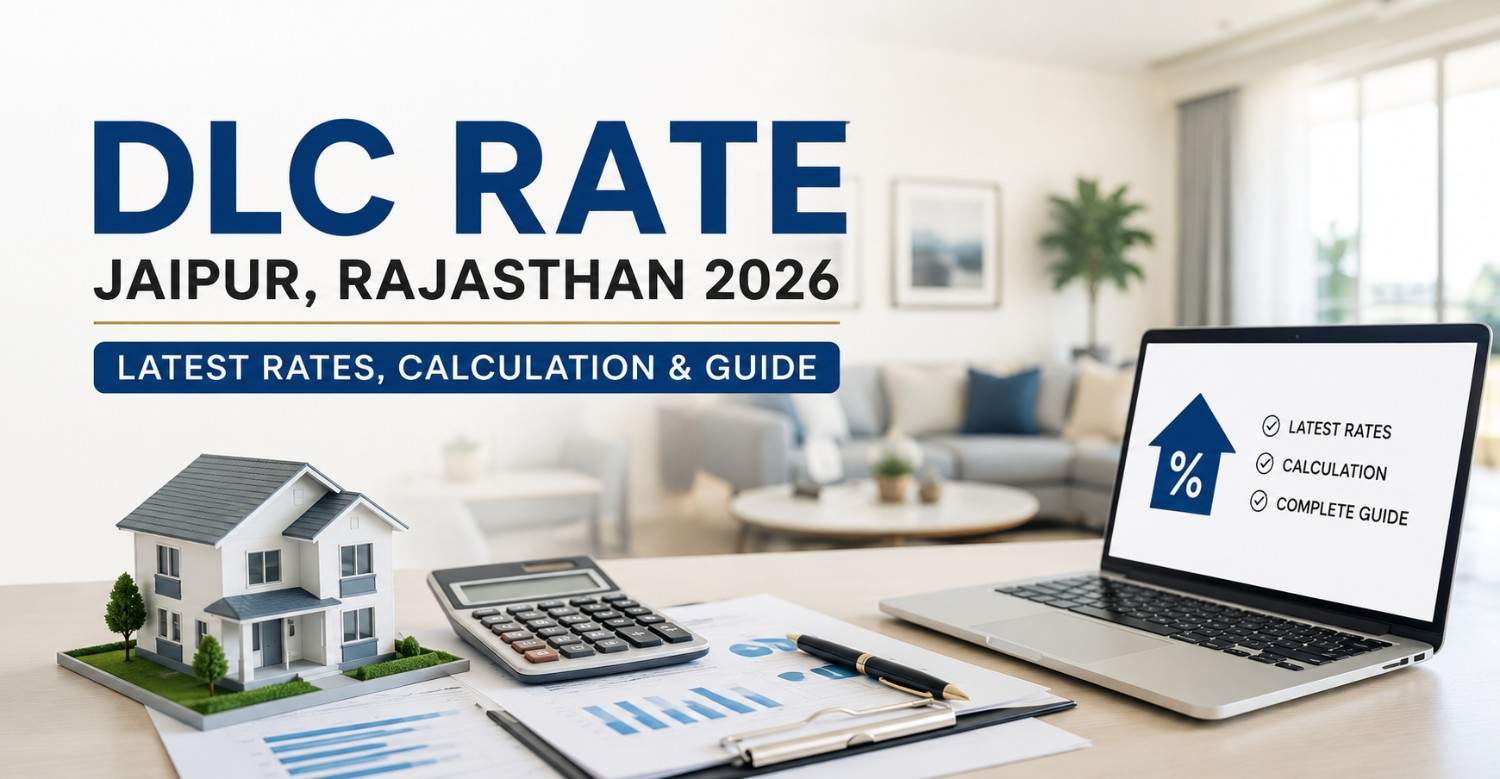
The new DLC rate Jaipur Rajasthan 2026 has increased by around 10% to nearly 49%, depending on the locality and property type. Areas such as Jagatpura, JLN Marg, Nandpuri and Jamna Vihar New have reported increases of up to 48-49%. The exact DLC rate Jaipur varies by location and property classification, so buyers should verify the latest rate through the Rajasthan e-Panjiyan portal.
Buying property in Jaipur in 2026 can cost more than the quoted property price suggests. One of the most important numbers buyers need to understand is the DLC rate, because it influences the value considered for property registration, stamp duty and registration-related expenses.
The latest revision has attracted attention because DLC rates have increased across several Jaipur localities, with reported hikes ranging from around 10% to as high as 49% in some areas. The impact can be significant for homebuyers, investors and developers, particularly where the government valuation moves closer to or above the actual market price.
DLC means District Level Committee. In Rajasthan, the DLC rate is a government-determined valuation benchmark used for property transactions. It varies according to the location and characteristics of the property.
In simple terms, think of the DLC rate as the government's benchmark value for land or property in a particular locality. It is different from the market price, which is the amount a buyer and seller actually negotiate.
For example, if a plot has a DLC rate of ₹20,000 per square metre and measures 200 square metres, its DLC-based value would be:
₹20,000 × 200 = ₹40 lakh
The applicable calculation can become more detailed for flats, commercial properties, agricultural land and properties with different road-facing or location classifications. Therefore, buyers should not rely on a general locality rate for a specific transaction.
The Rajasthan government's registration system provides an online facility for checking DLC rates by selecting the relevant district and property details.
The DLC rate is important because it affects the official valuation used during property registration and can influence the amount a buyer needs to pay towards transaction-related government charges.
Its importance can be understood through these points:
DLC rates help establish a minimum government-recognised value for property in different locations.
When the applicable government valuation increases, the amount used for calculating certain registration-related charges can also increase.
DLC rates provide an official benchmark that can help reduce the practice of declaring an unrealistically low property value during registration.
A buyer who only considers the property's quoted price may underestimate the total purchase cost. Understanding the DLC value helps create a more realistic budget.
| Factor | DLC Rate | Market Rate |
|---|---|---|
| Determined by | Government authorities | Buyer and seller |
| Purpose | Registration and valuation benchmark | Actual transaction |
| Changes | Through official revisions | Changes with market demand |
| Depends on | Location, property category and classification | Demand, supply, property quality and negotiations |
| Same everywhere? | No | No |
Expert Tip: Never assume that the DLC rate and market price are the same. Always check both before deciding whether a property is fairly priced.
The 2026 revision is particularly important because the reported increase is not uniform throughout Jaipur. Different localities have experienced different percentage increases.
According to reported figures, some areas have seen substantially higher revisions than others.
| Jaipur Area | Reported DLC Increase |
|---|---|
| Jamna Vihar New | Up to 49% |
| Nandpuri | Up to 48% |
| Jagatpura | Up to 48% |
| JLN Marg | Up to 48% |
| Malviya Nagar | 25% |
| Mansarovar | 25% |
| Pratap Nagar | 25% |
| Sanganer | 25% |
| Kanota | 25% |
| Prithviraj Nagar | 25% |
| Vaishali Nagar | 20% |
| Raja Park | 20% |
| Jawahar Nagar | 20% |
| Adarsh Nagar | 20% |
| Civil Lines | 20% |
| Sodala | 20% |
| Jhotwara | 20% |
| Vidyadhar Nagar | 15% |
| Ambabari | 15% |
| Shastri Nagar | 15% |
| Sikar Road | 15% |
These are reported area-wise percentage changes, not a universal per-square-metre DLC rate. The actual rate for a particular property can vary depending on its exact location and classification. Buyers should verify the applicable value through the official Rajasthan portal before registration.
The increase is also relevant to commercial property. Reports indicate that premium commercial locations such as Bapu Bazaar and MI Road carry very high government valuation benchmarks following the revision.
DLC rates are periodically revised to reflect changes in property values and development across different locations.
One major reason behind the latest revision is the gap between older government valuations and prevailing market values. As Jaipur expands and infrastructure improves, land prices in several corridors have increased considerably.
Some key reasons include:
The latest Jaipur revision has also generated concern within the real estate industry because a sharp increase can raise the upfront cost for buyers and potentially affect housing demand. Times of India reported that developers and industry representatives expect the higher DLC rates to increase home costs and put pressure on buyer affordability.
For homebuyers, the biggest concern is the effect on the total cost of purchasing property.
Suppose the applicable DLC-based value of a property is ₹50 lakh. If the relevant government charge is calculated at 6%, the amount would be:
₹50,00,000 × 6% = ₹3,00,000
Now suppose the revised DLC value becomes ₹60 lakh:
₹60,00,000 × 6% = ₹3,60,000
The difference is ₹60,000, even if the negotiated property price has not changed.
This is why understanding the DLC rate Jaipur Rajasthan is important before finalising a property purchase.
A higher DLC value may also affect:
The exact charges depend on the applicable Rajasthan rules and the buyer/property category, so buyers should confirm the payable amount at the time of registration.
You can use this basic approach to estimate the DLC-based property value:
DLC Value = Applicable DLC Rate × Property Area
For example:
This is only a basic illustration. Actual valuation can depend on whether the property is residential or commercial, interior or exterior, land or apartment and other applicable classifications.
The DLC revision matters to investors because it changes the cost structure and valuation environment.
For investors, a higher DLC rate can have both positive and negative implications.
A rising DLC rate can indicate that government valuations are being revised in response to increasing land values. Investors may interpret sustained upward revisions as one signal of growth in particular locations.
Areas experiencing infrastructure development and increasing demand may continue to attract buyers and investors.
Higher official valuations can increase acquisition and registration expenses. This is particularly important for investors who purchase multiple properties or operate with tight investment margins.
Higher transaction costs can also affect short-term returns.
Before investing, compare:
For example, a locality such as Jagatpura may look attractive because of development and connectivity, but investors should still calculate the complete acquisition cost rather than relying only on expected appreciation.
Buyers researching Jaipur's property market can also compare current listings and locality trends through platforms such as Search Abode before making a decision.
The safest way to find the applicable DLC rate Jaipur is to check the Rajasthan government's registration and stamps system rather than relying solely on old property articles or broker estimates.
The Rajasthan e-Panjiyan system provides an online DLC-rate facility.
The official portal itself advises users to verify information because online records can be updated and errors may be corrected.
Expert Tip: Take a screenshot or save the applicable DLC information when preparing your purchase budget. However, always confirm the current rate again immediately before registration because revisions or corrections can change the applicable figure.
DLC rate is only one part of property due diligence. Before paying a token amount or signing an agreement, review the complete financial and legal picture.
Don’t rely only on the advertised price. Include:
Property price + stamp duty + registration charges + taxes/fees + legal costs + other expenses
This gives a more accurate estimate of the total cost of purchase.
The DLC rate Jaipur Rajasthan is a key factor for anyone buying, selling or investing in property in 2026. Recent revisions have increased government valuation in several areas, with hikes ranging from moderate levels to nearly 49%, which can directly impact overall transaction costs.
There is no single DLC rate for Jaipur, it varies by locality, property type and land use. Before making a purchase, always compare the DLC value with the market price, estimate total registration costs and verify the latest rate on the official Rajasthan e-Panjiyan portal to avoid unexpected expenses.
Jaipur's DLC rates were revised in 2026, with reported increases ranging from around 10% to nearly 49% in different areas. The exact rate depends on the property location and classification.
You can check the DLC rate Jaipur through the Rajasthan e-Panjiyan portal by selecting the district, locality and property category.
The basic formula is DLC Value = DLC Rate × Property Area. For example, ₹30,000 × 200 sq. metres equals ₹60 lakh.
No. The DLC rate is a government valuation benchmark, while the market price is the actual price negotiated between the buyer and seller.
Reported higher increases include areas such as Jagatpura, JLN Marg, Nandpuri and Jamna Vihar New. Always verify the exact rate for your property.
DLC rates are revised to reflect changes in property values, infrastructure, urban development and market conditions.