Published on: 5 November 2026
Mukhyamantri Jan Awas Yojana Rajasthan: New Proposed Rules and Benefits for Homebuyers
Quick answer
Mukhyamantri Jan Awas Yojana is a Rajasthan Government initiative aimed at providing affordable housing to EWS and LIG families. The proposed new rules include additional construction benefits (BAR) for builders, 100% fee waivers on certain charges and improved location requirements for affordable housing units. These changes aim to increase affordable housing supply, encourage developers and make homeownership more accessible in Rajasthan. However, the proposals are still under consideration and are subject to final government approval.
Table of Contents
- What Is Mukhyamantri Jan Awas Yojana Rajasthan?
- What Are the New Proposed Rules Under Mukhyamantri Jan Awas Yojana?
- How Will the Proposed Housing Policy Benefit Homebuyers?
- What Could Be the Impact on Jaipur's Real Estate Market?
- Is the Rajasthan Housing Board New Scheme Already Implemented?
- Expert Tips for Homebuyers and Property Investors
Buying an affordable home in Rajasthan could become easier in the coming years if the state government's proposed housing policy amendments are approved. With rising property prices and increasing demand for budget-friendly residential properties, the government is exploring ways to encourage developers to build more homes for economically weaker sections (EWS) and lower-income groups.
Under the proposed changes to the Mukhyamantri Jan Awas Yojana Rajasthan, developers could receive additional construction benefits and exemptions from certain government charges. The proposal also focuses on improving the location of affordable housing units so that residents can access essential facilities, transportation and infrastructure more conveniently.
What Is Mukhyamantri Jan Awas Yojana Rajasthan?
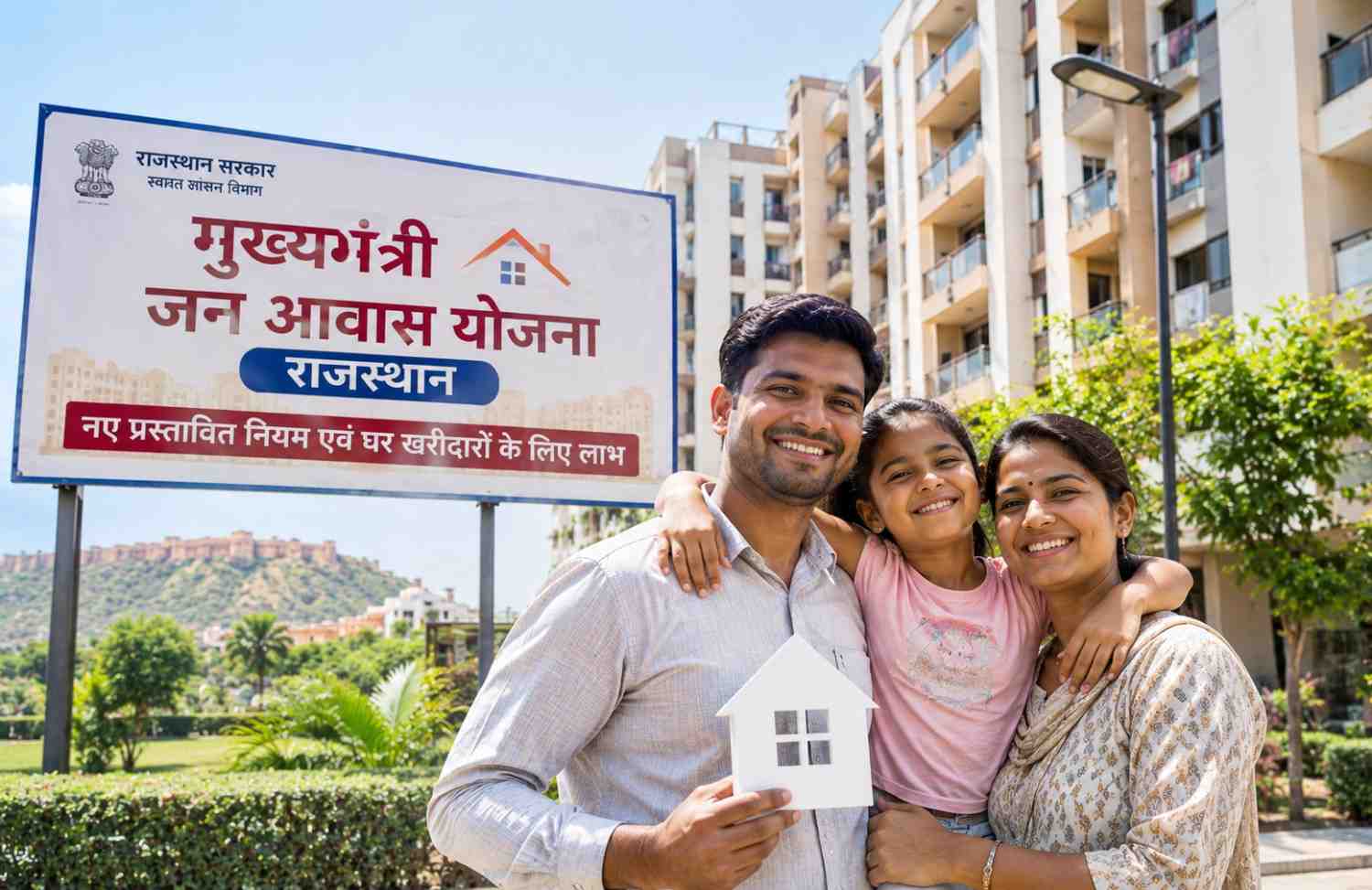
Mukhyamantri Jan Awas Yojana is a Rajasthan government housing initiative designed to promote affordable residential development for economically weaker sections and lower-income families.
The scheme aims to increase the availability of budget-friendly homes by encouraging private developers and supporting affordable housing projects across the state.
Its broader objectives include:
- Providing affordable housing opportunities to eligible families.
- Encouraging private builders to participate in residential development.
- Improving access to basic infrastructure and essential services.
- Promoting planned and organised housing development.
- Supporting the state's affordable housing requirements.
The latest proposed amendments aim to address certain challenges in the existing framework, including construction delays, project feasibility and the distance between affordable housing units and main residential developments.
What Are the New Proposed Rules Under Mukhyamantri Jan Awas Yojana?
According to an ETRealty report published on November 5, 2026, Rajasthan's Urban Development Department has drafted several amendments to encourage private developers to participate in affordable housing projects.
Here are the major proposed changes.
1. Additional Buildable Area Ratio (BAR) for Developers
One of the most important proposals is the provision of additional Buildable Area Ratio (BAR) for affordable housing projects.
The draft proposes:
- An additional 1.0 BAR for EWS and LIG housing.
- Additional BAR ranging from 0.75 to 2.0 for individual residential projects, depending on building height.
BAR determines how much construction area can be developed on a particular plot of land. Additional BAR could allow developers to utilise more construction potential, subject to applicable regulations.
This incentive may improve project feasibility and encourage builders to develop more affordable residential units.
2. 100% Exemption From Certain Government Charges
Another significant proposal is a 100% exemption from several government levies, including land conversion charges.
Land conversion charges are fees associated with changing land use, such as converting agricultural land into residential or other permitted uses.
Under the proposed amendments, these exemptions could reduce certain development expenses for builders.
Potential benefits include:
- Lower eligible government-related project costs.
- Improved financial feasibility for developers.
- Greater interest in affordable housing development.
- Opportunities to increase the supply of budget-friendly homes.
However, the actual financial benefit will depend on the final notified provisions and applicable project conditions.
3. New Distance Restrictions for EWS and LIG Housing
The proposal also addresses an important issue in affordable housing development.
In some projects, mandatory EWS and LIG units are developed far away from the main residential project. This can make it difficult for residents to access roads, public transportation, water supply and other essential facilities.
To address this concern, the government has proposed distance restrictions based on city population.
| City Population | Proposed Maximum Distance |
|---|---|
| More than 10 lakh | 5 km |
| 1 lakh to 10 lakh | 3 km |
| Less than 1lakh | 2 km |
For example, in a city like Jaipur, which falls within the above-10-lakh population category, the proposed maximum distance would be 5 km.
This change could help affordable housing residents access better connectivity and essential infrastructure.
4. Increase in Minimum Land Requirement
The government has also proposed increasing the minimum land requirement for affordable housing projects.
Under the proposed amendments, projects would need to be developed on plots larger than 10,000 square metres, compared with the existing threshold of 5,000 square metres.
| Particulars | Existing Requirement | Proposed Requirement |
|---|---|---|
| Minimum land area | 5,000 sq. m. | More than 10,000 sq. m. |
The objective is to encourage larger, better-planned residential developments and address issues such as construction delays and stalled projects.
How Will the Proposed Housing Policy Benefit Homebuyers?
Although the proposed incentives are primarily designed for developers, homebuyers could also benefit indirectly if the policy is implemented successfully.
Here are some potential advantages.
More Affordable Housing Options
Additional construction incentives may encourage developers to launch more EWS and LIG housing projects. This could increase the availability of budget-friendly homes across Rajasthan.
Better Connectivity and Infrastructure
The proposed distance restrictions could help ensure that affordable housing units are located closer to the main residential development.
This may improve access to transportation, roads, water supply and other essential facilities.
More Organised Residential Projects
Larger minimum land requirements could encourage developers to plan housing projects with better layouts and infrastructure.
Potential Improvement in Housing Availability
If developers find affordable housing projects more financially viable, the market could see increased participation from private builders.
However, these benefits are potential outcomes, not guaranteed results. The policy does not automatically promise lower property prices or immediate home availability.
What Could Be the Impact on Jaipur's Real Estate Market?
Jaipur is one of Rajasthan's important residential property markets, with demand across affordable, mid-range and premium housing segments.
If the proposed amendments are approved, the city's affordable housing segment could receive additional development opportunities.
Some potential developments include:
- More affordable residential projects for budget-conscious buyers.
- Greater participation from private real estate developers.
- Better integration of EWS and LIG housing with larger residential developments.
- Increased focus on planned housing and essential infrastructure.
For people exploring affordable flats in Jaipur, keeping track of these developments could help them understand future housing opportunities.
Property buyers can also follow local residential market updates and explore suitable housing options through platforms such as Search Abode.
Is the Rajasthan Housing Board New Scheme Already Implemented?
No. The proposed amendments should not be confused with an officially implemented new housing scheme.
The Rajasthan housing board new scheme is a search term that homebuyers may use when looking for government-backed residential opportunities. However, the development discussed here specifically concerns proposed amendments to the existing Mukhyamantri Jan Awas Yojana under Rajasthan's Urban Development Department.
As reported on November 5, 2026, the draft proposals are yet to complete the government's discussion and notification process.
Therefore, buyers and developers should wait for the official notification before making decisions based on the proposed benefits.
Expert Tips for Homebuyers and Property Investors
Before purchasing a property under an affordable housing project, consider the following points:
- Verify project approvals: Check the relevant approvals and registration details before making a purchase.
- Understand eligibility: Confirm whether the property falls under EWS, LIG or another housing category.
- Check connectivity: Evaluate road access, transportation, water supply and nearby facilities.
- Review the final policy: Do not assume proposed benefits are already applicable.
- Compare property options: Evaluate the location, construction quality, amenities and total purchase cost.
Conclusion
The proposed amendments to Mukhyamantri Jan Awas Yojana Rajasthan could bring meaningful changes to the state's affordable housing sector. Additional BAR, exemptions from certain government charges and improved location requirements may encourage private developers to build more organised and accessible housing projects for EWS and LIG families.
For homebuyers, these proposals offer a reason to keep an eye on Rajasthan's evolving residential property market, particularly in Jaipur. However, since the amendments are still at the draft stage, buyers and developers should wait for the final government notification before treating any proposed benefit as an existing rule.
Frequently Asked Questions
Mukhyamantri Jan Awas Yojana is a Rajasthan Government housing initiative aimed at providing affordable homes to Economically Weaker Sections (EWS) and Low-Income Groups (LIG) families.
The proposed rules include additional BAR for builders, 100% waivers on certain government charges, revised minimum land requirements, and improved location rules for affordable housing units.
Homebuyers may benefit from more affordable housing options, better project locations, improved connectivity, and increased availability of EWS and LIG residential units.
Under the proposed amendments, eligible affordable housing projects may receive an additional 1.0 BAR, while certain individual residential projects may receive additional BAR ranging from 0.75 to 2.0, subject to applicable conditions.
The proposed amendments include 100% exemptions on certain government charges, including land conversion charges, to encourage builders to develop affordable housing projects.