Published on: 15 September 2026
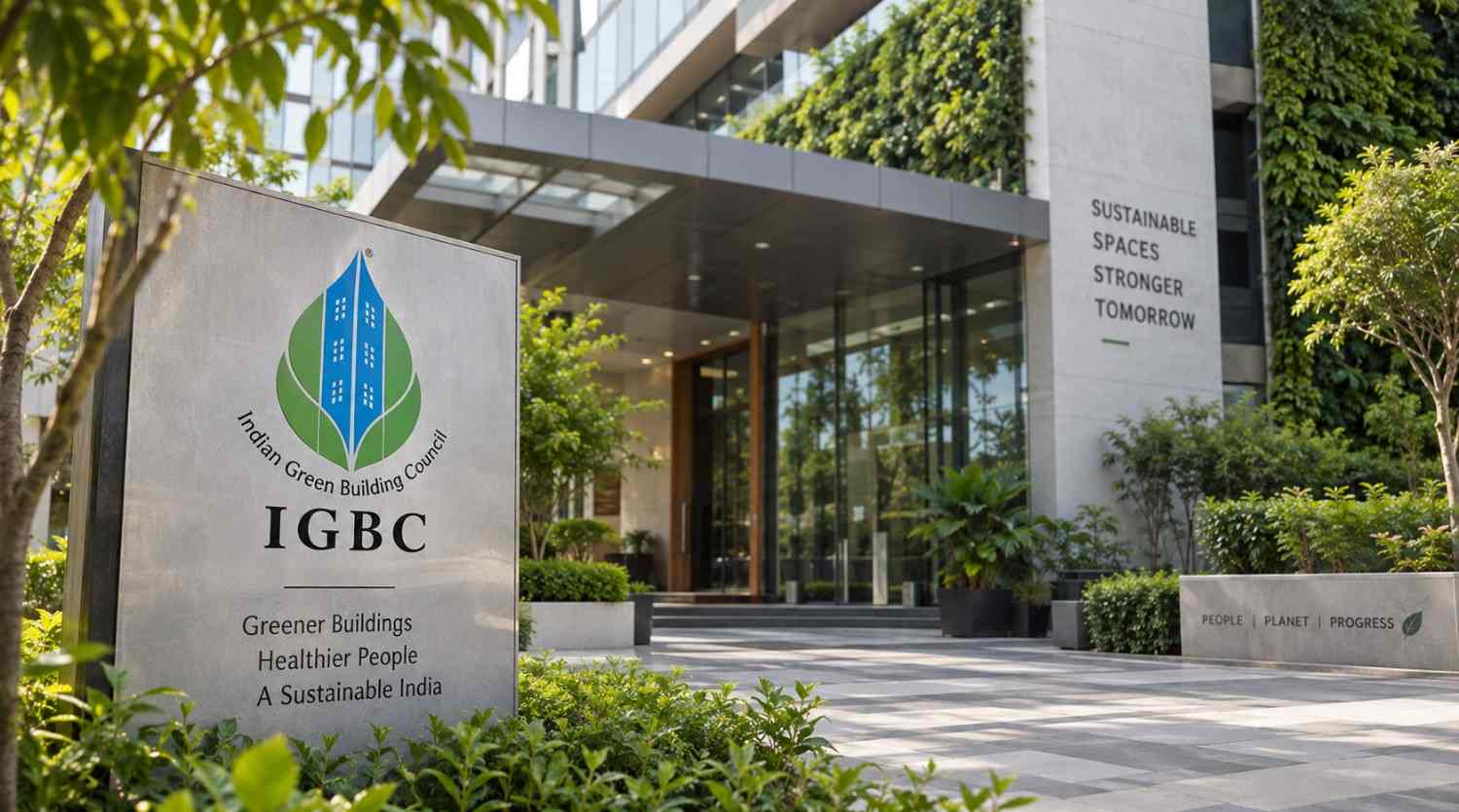
IGBC certification is a green building certification by the Indian Green Building Council that evaluates buildings for energy efficiency, water conservation, sustainable materials, and indoor comfort. IGBC Green Homes offers ratings from Certified to Platinum and helps promote more sustainable, efficient, and cost-effective homes.
Rising electricity bills, water shortages, increasing temperatures and growing awareness of sustainable living are changing how Indians think about homes and buildings. Today, a green building is not just about protecting the environment, it can also mean lower operating costs, better indoor comfort, healthier living spaces and stronger long-term property value.
But what exactly makes a building “green” and how can buyers, homeowners and developers verify their sustainability claims? IGBC certification provides a structured way to assess buildings based on energy efficiency, water conservation, materials, indoor environmental quality and other sustainability practices.
IGBC certification is a sustainability rating and certification framework developed by the Indian Green Building Council (IGBC) to encourage environmentally responsible building design, construction and operation in India.
Rather than simply checking whether a building has a few green features, the IGBC rating system evaluates multiple aspects of a project. These can include energy performance, water efficiency, site planning, material selection, waste management, indoor environmental quality and innovative design practices.
IGBC has developed different rating programmes according to building type. These include systems for green homes, new buildings, residential societies, affordable housing, hotels, campuses and other projects.
The recently published Magicbricks green-home guide also highlights IGBC alongside other Indian green-building rating systems and explains why sustainability is becoming increasingly relevant to homeowners and property buyers.
IGBC Green Homes is a rating programme specifically designed for residential buildings. According to IGBC, it was the first rating programme developed in India exclusively for the residential sector.
It can be applied to different residential formats, including:
The programme can also be relevant to new and major renovation projects depending on the applicable criteria.
The IGBC Green Homes framework evaluates sustainability across several important areas:
These categories combine mandatory requirements with credit-based assessment. Projects must satisfy applicable mandatory requirements before earning certification based on their overall score.
One of the most important things to understand about the IGBC rating system is that projects can achieve different certification levels based on the number of credits earned.
For IGBC Green Homes, the current thresholds for multi-dwelling residential units are:
| IGBC Rating | Credit Points | Recognition |
|---|---|---|
| Certified | 50–59 | Best Practices |
| Silver | 60–69 | Outstanding Performance |
| Gold | 70–79 | National Excellence |
| Platinum | 80–100 | Global Leadership |
A higher rating generally indicates that a project has demonstrated stronger performance against the applicable sustainability criteria. However, the rating should be considered alongside the actual features and performance commitments of the project.
Why are developers and homeowners increasingly interested in green building certification? The benefits go beyond environmental responsibility.
Energy-efficient building design can reduce electricity consumption through better planning, efficient equipment, daylight utilization, ventilation and other measures.
IGBC states that Green Homes can achieve 20–30% energy savings, although actual savings vary depending on the building, design, occupancy, climate and operating practices.
Water-efficient fixtures and conservation strategies can significantly reduce water consumption.
IGBC indicates potential water savings of 30–50% for Green Homes.
Green buildings can provide better daylight, ventilation and indoor environmental quality. These features can contribute to a more comfortable living environment and support occupant health and wellbeing.
Efficient energy and water systems can reduce recurring utility expenses. Although green features may involve additional upfront planning or investment, their long-term operating benefits can make them financially attractive.
Sustainability can become an important differentiator in a competitive real estate market. Developers may use green certification to demonstrate that a project follows a recognized sustainability framework.
For buyers researching environmentally responsible residential projects, platforms such as Search Abode can also be useful when comparing properties and understanding project features.
The certification process depends on the applicable IGBC rating system and project type. For a residential project, the general process involves:
First, identify whether the project falls under Green Homes, Green Residential Societies, Green New Buildings, Affordable Housing or another relevant IGBC programme.
The project team registers with IGBC under the applicable rating programme and reviews the requirements.
Architects, consultants, engineers, contractors and developers work together to incorporate applicable sustainability measures into the project.
The team prepares drawings, calculations, specifications, photographs, invoices, reports and other supporting documentation required by the rating system.
IGBC reviews the submitted documentation and applicable project information. Once the mandatory requirements and required credit threshold are achieved, the project can receive the corresponding certification level.
For projects seeking pre-certification, additional validation requirements may apply during construction. IGBC notes that Green Homes pre-certification is subject to periodic project-status validation until final certification.
For a homebuyer, an IGBC-certified property can be worth considering because it provides a structured sustainability benchmark rather than relying only on a developer's general claim that a project is “eco-friendly.”
However, certification should not be the only factor in a property purchase. Buyers should also evaluate:
A green rating is most valuable when it is supported by practical features that deliver measurable benefits throughout the building's lifecycle.
Green building certification is the broader concept of evaluating a building's environmental and sustainability performance. IGBC is one of India's major organizations offering such rating systems.
Therefore, these terms should not be treated as exactly the same:
India also has other green-building assessment frameworks, so the appropriate system depends on the project's purpose, building type and certification requirements.
IGBC certification in India has become an important benchmark for sustainable construction and responsible real estate development. It gives developers a structured framework for improving energy efficiency, water conservation, material usage, indoor environmental quality, and overall building performance.
For homebuyers, understanding IGBC Green Homes and the broader IGBC rating system can make it easier to compare sustainability claims and identify projects designed with long-term efficiency in mind. As energy costs, environmental concerns and demand for healthier homes continue to grow, green certification can become an increasingly valuable part of India's real estate landscape.
For IGBC Green Homes multi-dwelling residential units, the levels are Certified, Silver, Gold and Platinum, with Platinum requiring 80–100 credit points.
It can. IGBC states potential energy savings of 20–30% and water savings of 30–50% for Green Homes, although actual savings depend on project design, systems, occupancy and usage.
IGBC Green Homes is a residential green building rating system that promotes energy-efficient, water-saving, and environmentally responsible homes.
Benefits include lower energy and water consumption, improved indoor comfort, reduced operating costs and better sustainability.
Yes. It can help homebuyers identify residential projects that follow recognized sustainability standards and use resource-efficient design.