Published on: 30 June 2026
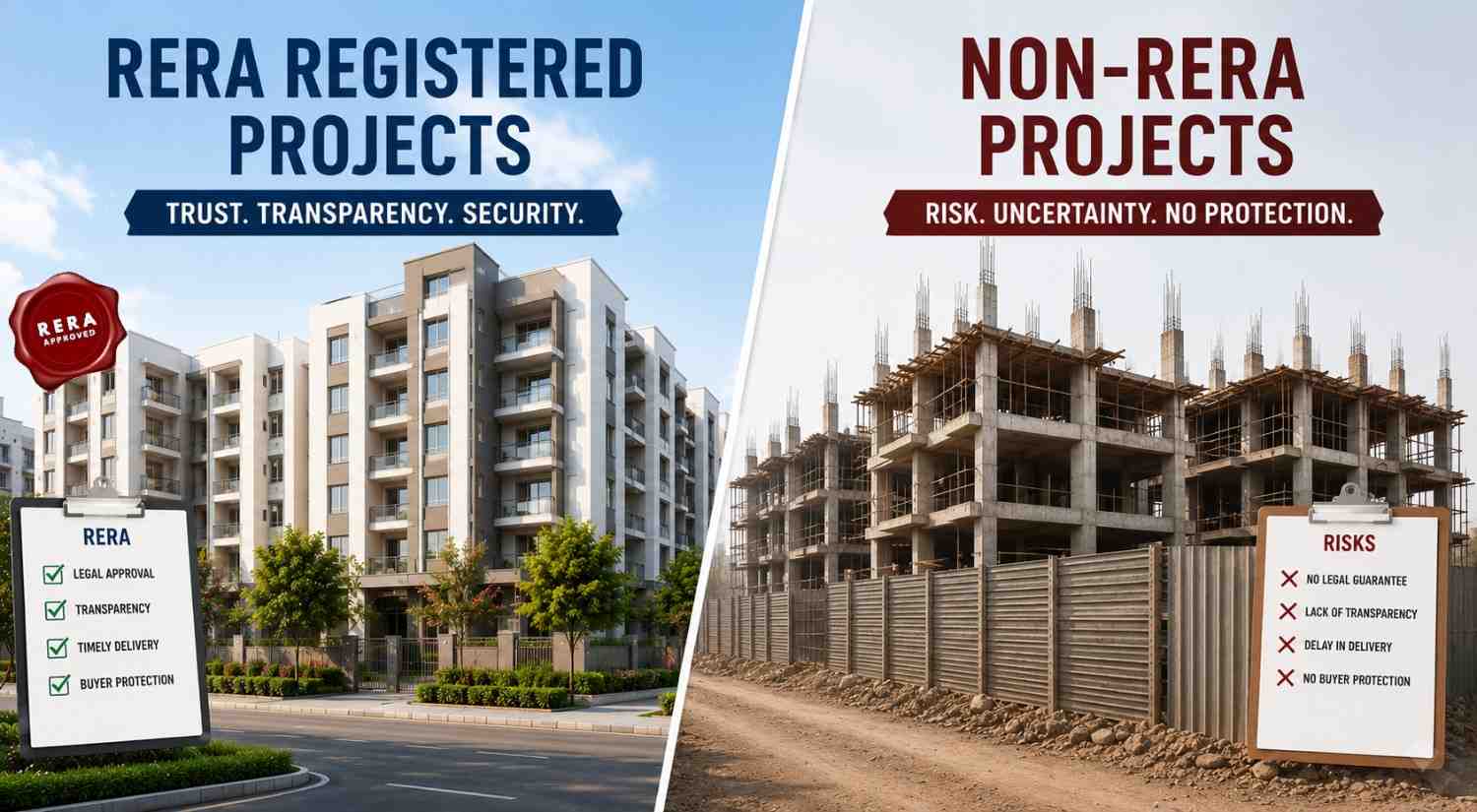
RERA-registered projects are generally a safer choice than non-RERA projects because they offer legal protection, transparent project details, timely possession commitments and a dedicated grievance redressal system. While some non-RERA projects may be genuine or legally exempt, buyers should carefully verify approvals, builder credibility and property documents before investing.
Buying a home or investing in real estate is one of the biggest financial decisions you'll ever make. However, choosing between RERA registered projects and non-RERA projects can be confusing, especially if you are a first-time buyer. Understanding the differences can help you avoid unnecessary risks and make a smarter investment.
At Search Abode, we believe that informed buyers make better property decisions. This guide explains everything you need to know in simple language, from the benefits of RERA registered projects to how you can verify a project's registration before booking.
RERA registered projects are real estate developments that are officially registered under the Real Estate (Regulation and Development) Act, 2016. This law was introduced to improve transparency, protect homebuyers and make builders more accountable.
Before selling units, developers must register eligible projects with the state's RERA authority. They are also required to disclose important details such as:
This gives buyers confidence that the project is being monitored by a regulatory authority.
Non-RERA projects are developments that are either legally exempt from registration or are not registered despite being required to do so.
Some smaller projects may qualify for exemption under RERA rules. However, if a project should be registered but isn't, buyers should be extremely cautious.
Since these projects are not regulated under RERA, buyers may receive limited information about approvals, timelines and builder commitments.
Here's a simple comparison to understand the key differences.
| Feature | RERA Registered Projects | Non-RERA Projects |
|---|---|---|
| Government Registration | Yes | Not always |
| Transparency | High | Limited |
| Buyer Protection | Strong | Lower |
| Construction Updates | Mandatory | Optional |
| Project Timeline | Legally Declared | Flexible |
| Builder Accountability | High | Depends on Builder |
| Complaint Resolution | Through RERA Authority | Consumer Court or Civil Court |
| Investment Risk | Lower | Higher |
Overall, RERA registered projects offer more security and transparency for buyers.
Choosing a RERA registered property comes with several advantages.
Builders must provide complete project details, including approvals, layouts and construction progress. Buyers know exactly what they are investing in.
If the builder fails to meet promised commitments, buyers have the right to file complaints with the RERA authority.
Developers must declare the possession date during registration. Delays may result in penalties or compensation, depending on applicable rules.
A significant portion of the money collected from buyers must be used only for the construction of that project. This reduces the chances of fund diversion.
Builders are legally responsible for delivering the project according to the approved plans and specifications.
Many homebuyers and banks prefer RERA approved projects because they offer greater transparency and lower investment risks.
Not every non-RERA project is unsafe, but buyers should be more careful.
Some common risks include:
This doesn’t mean every non-RERA project is problematic, but buyers need to conduct thorough research before investing.
If you are planning to buy a property, always verify its registration status first.
Follow these simple steps:
Each state has its own RERA portal where registered projects are listed.
Enter the:
Check the following information:
Ensure the project information matches what the builder has shared.
At Search Abode, we always recommend verifying RERA details before paying any booking amount. A few minutes of research can save you from major financial and legal problems later.
No.
Some projects may be exempt under the RERA Act or applicable state rules. These can include certain smaller developments, specific renovation projects or projects completed before RERA came into force.
However, if a project is legally required to register and has not done so, buyers should proceed with extreme caution.
For more buyers, RERA registered projects are the safe choice.
They provide:
A non-RERA project may still be worth considering if it is legally exempt and has a strong developer reputation, clear approvals and proper documentation. Even then, careful due diligence is essential.
Before making a final decision, ask the builder:
These questions can help you identify potential issues before investing your money.
When comparing RERA registered projects with non-RERA projects, the main difference is how safe and transparent they are for buyers. RERA registered projects share clear and verified information, follow rules for using buyer funds, have fixed timelines for completion and offer a proper system to handle complaints. This makes them a safer and more reliable option for most homebuyers and investors.
Before booking any property, always check if it is RERA registered, learn about the builders reputation and go through all important documents carefully. At Search Abode, we encourage buyers to do proper research so they can make smart decisions and invest with confidence.
No. Certain projects may be exempt under the RERA Act or applicable state rules. Buyers should verify whether a project is legally required to be registered.
You can visit your state's official RERA website and search using the project name, developer name, or RERA registration number.
Yes. RERA registered projects generally offer greater transparency, legal safeguards, and accountability, making them a safer option for most buyers.
Many banks find financing easier for RERA registered projects because project information is publicly available and regulatory compliance is easier to verify. However, loan approval also depends on other factors.
Yes. If the project is registered under RERA and the builder violates the agreed terms or applicable provisions, buyers can approach the state's RERA authority for grievance redressal.