Published on: 28 November 2026
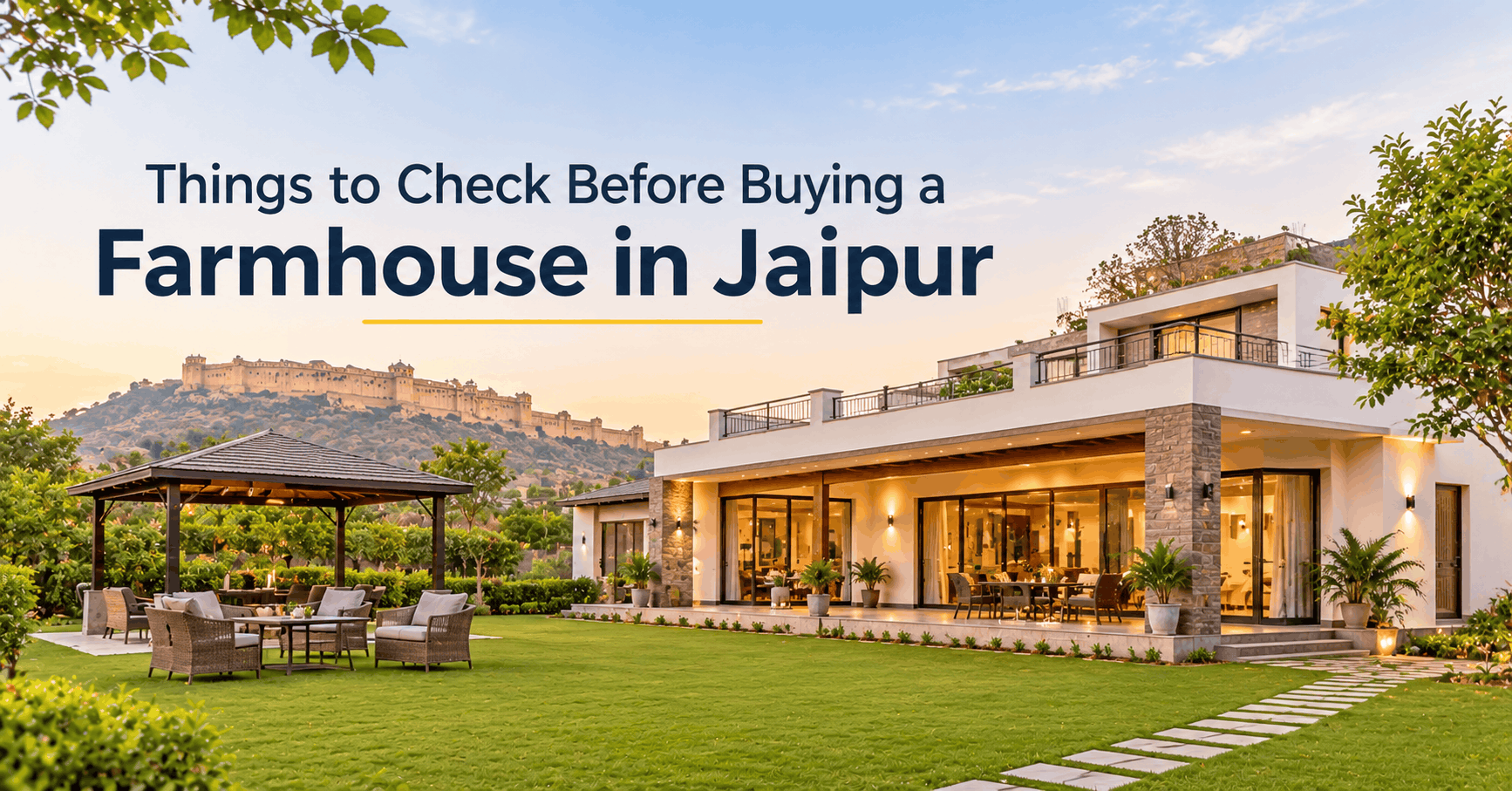
Before buying a farmhouse in Jaipur, verify the land's zone under the JDA master plan, confirm the plot meets the minimum area (Rajasthan rules define a farmhouse plot as 2,500 sq m or more), check the conversion status, match the title with jamabandi and mutation records, confirm legal road access, and ask about future road or acquisition plans.
A farmhouse can offer space, greenery and a weekend escape close to the city, but it is also one of the riskiest property purchases when checks are skipped. Farmland is regulated differently from plots and flats, so the things to check before buying a farmhouse in Jaipur start with the land's zone, conversion status and title, not the view or the price.
Use this farmhouse buying checklist when comparing farmhouses in Jaipur, so you can separate approved land from risky deals and know which documents to ask for before you pay a token amount.
Rajasthan's rules for urban areas define a farmhouse as a plot of 2,500 sq m or more in an ecological area, rural belt, periphery belt or another zone of the master plan, with a built-up area of not more than 10% of the plot or 500 sq m, whichever is less. The Jaipur building bye-laws follow a similar logic and require the open land to be used for agriculture, orchards, a nursery or afforestation.
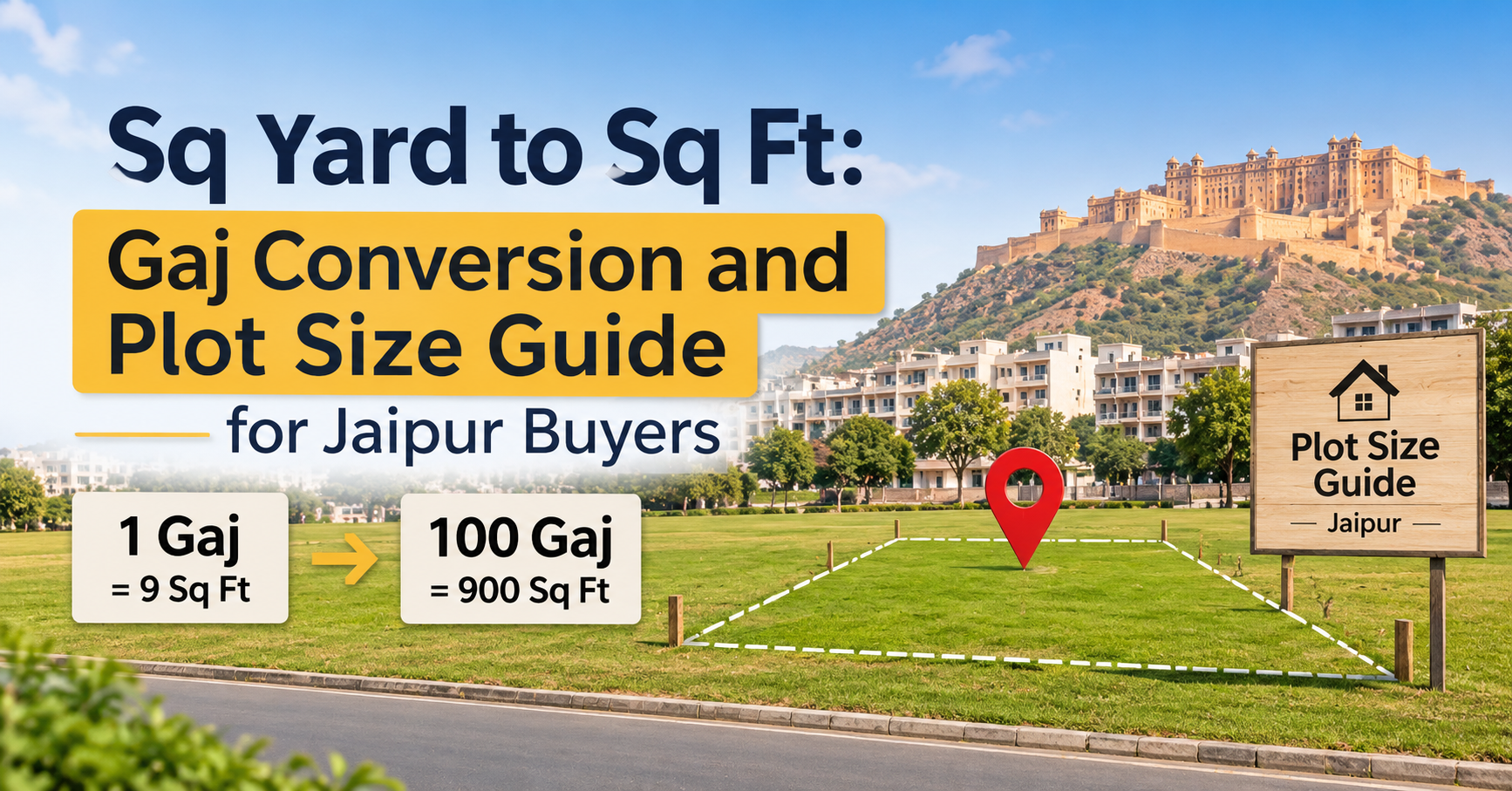
In simple units, 2,500 sq m is about 26,910 sq ft or roughly 2,990 gaj. If a seller offers a "farmhouse plot" of 500 or 1,000 gaj, ask which rule it qualifies under. A smaller parcel may be a residential plot or a different land use, not a farmhouse.
Every parcel in the JDA region falls in a zone, such as urban, ecological, buffer or rural area. Farmhouses are generally allowed only in certain zones, and the exact rules depend on where your khasra sits. Ask the seller for the khasra number and village, then confirm the zone with JDA's master plan maps or its zonal office.
Do not accept a broker's verbal assurance that the land is a "farmhouse zone". The current JDA plan still governs approvals today, so rely on the maps and the zonal office, not on a seller's word.
This is where many buyers get surprised. Even on a large plot, you cannot cover the land with construction:
Farmhouse schemes developed by a builder have their own rules. The Rajasthan Township Policy 2024 lists a minimum scheme area of 5 hectares in big cities and a minimum plot size of 1,500 sq m inside a scheme. Older planning documents show different thresholds, so ask JDA which one applies to your land before you rely on any number.
Agricultural land normally needs a change of land use before it can be used for non-agricultural purposes. In Rajasthan, this is commonly called 90A conversion after Section 90A of the Rajasthan Land Revenue Act. Urban and rural areas follow different rules, and the rural conversion rules were updated in 2026.
Do not assume that a farmhouse needs no permission. Farmhouse and resort-style uses have their own norms, and construction without approval can be treated as unauthorised use. Read our guide on land conversion rules and ask the seller for the conversion order, or for a written explanation of why none is needed for the planned use.
Clean ownership matters even more on farmland, where family holdings and shared khatedari rights are common. Ask for the legal documents for buying a farmhouse:
Check the Rajasthan land records online and match every detail with the seller's papers. A registered sale deed alone does not update the revenue record, so confirm that the mutation is completed in your name after purchase.
A beautiful plot with no legal access is a problem. Confirm that the land touches a public road or has a registered right of way. Farmhouse norms also specify minimum road widths for schemes, so ask what applies. Check the availability of electricity, water and a borewell, since the cost of bringing them in can be high in remote locations.
Master plan roads can cut through farmland. Under the Rajasthan Township Policy 2024, land affected by a master plan or zonal plan road inside a farmhouse parcel is to be surrendered free of cost to the urban local body. This could reduce your usable area, so check the proposed roads in the plan and look for any acquisition notice on the land.
If you buy a plot in a developer's farmhouse scheme, ask for the layout approval, the sanction from the concerned authority and the RERA registration, where applicable. Verify the registration number on the official portal and compare the sanctioned layout with what the seller shows you on site. Do not buy on the basis of a brochure alone.
Guides on Rajasthan's rules say that any individual, whether a farmer or not, can buy agricultural land in the state, subject to the land ceiling law. NRIs and OCI cardholders generally cannot buy agricultural land, plantation property or a farmhouse in India under foreign exchange rules, so check your eligibility first if you live abroad.
A farmhouse gives you much more land and an open setting, but only a small share of it can be built on, and the upkeep can be higher. A residential plot in an approved layout gives you building rights as per the applicable FAR and is usually easier to finance and resell. Which one suits you depends on how you plan to use the property, so compare farmhouse vs plot Jaipur options against your budget and your travel time to the city.
Beyond the price, budget for stamp duty and registration, conversion charges where applicable, a boundary survey, fencing, a caretaker, water arrangements and regular maintenance. Ask for a written list of costs from the seller and check the figures with a lawyer. Financing for agricultural land can be harder than for flats, so speak with your lender early.
Buying a farmhouse in Jaipur is about the land, not the lifestyle shots. Zone, plot size, conversion, title and access decide whether your farmhouse is legal, buildable and easy to sell later. A few hours of checking now can save years of dispute later.
Run each check before you pay, and take a property lawyer's help for the documents. To understand zones better, read our Master Plan 2047 guide. If you would like help shortlisting verified farmhouses in Jaipur, the Search Abode team can guide you.
Check the land's zone, minimum area, conversion status, title and mutation records, access road, future road plans and approvals for any developer scheme.
Rajasthan's urban area rules define a farmhouse as a plot of 2,500 sq m or more. Scheme plots and older documents may show different thresholds, so confirm with JDA.
Built-up area is capped at 10% of the plot or 500 sq m, whichever is less. The rest must remain open for agriculture-linked use.
Do not assume it is not. Farmhouse use has its own norms, and conversion rules differ for urban and rural areas, so ask for the conversion order or a written explanation.
You need the seller's sale deed, jamabandi and khasra details, mutation record, co-owner consent where relevant, an encumbrance check and conversion papers if applicable.
NRIs and OCI cardholders generally cannot buy agricultural land, plantation property or a farmhouse in India under foreign exchange rules. Take professional advice before proceeding.